You are here
E1. Indigenous
India: Indigenous activist arrested after protesting luxury Hyatt hotel project
American 250: A Republic Built on Native Land
As the United States marked its 250th anniversary of the Declaration of Independence, Native leaders, scholars, and advocates say the country’s milestone cannot be understood without acknowledging the Indigenous nations that predate the U.S and the promises that remain unfulfilled.
During a Native News Online live stream, America 250: A Republic Built on Native Land, hosted by Editor Levi Rickert, five conversations explored what America’s semiquincentennial means from Native perspectives. Guests included Cherokee Nation Principal Chief Chuck Hoskin Jr.; Navajo author and activist Mark Charles; Native Organizers Alliance Executive Director Judith LeBlanc; and professors Anton Treuer and Dina Gilio-Whitaker.
Although their perspectives differed, each agreed on one point: the nation’s history and its future must include Native voices.
The post American 250: A Republic Built on Native Land appeared first on Native Organizers Alliance.
Colonialism On and Off the Pitch: How the 2026 World Cup Reveals Football’s Colonial Legacy
THE 23RD FIFA (Fédération Internationale de Football Association) Men’s World Cup kicked off on June 11th in Mexico City. The nearly 40-day tournament is being hosted by 16 cities across Turtle Island, including Toronto and Vancouver.
The tournament’s arrival is being celebrated as a moment of global attention and intra-national pride across the three nations. Yet, beneath the banner of “United as One” lie entrenched colonial logics and practices.
Whether it’s concrete harms advanced on Indigenous lands to secure the 2026 tournament stadiums, or the lack of institutional reckoning with football’s ongoing legacy of systemic racism, corruption, and colonialism, we cannot ignore that football has always been a deeply political terrain.Still, while there are countless critiques to make of FIFA and elite sport more generally, we ask: can football be a tool for decolonization and social change?
A Global Celebration, Paid for by Local CommunitiesFIFA reported that more than half of the world’s population engaged with the 2022 FIFA Men’s World Cup across all media platforms, including linear television, digital channels, social media, and FIFA-owned platforms. The final match alone attracted an estimated global audience of 1.42 billion viewers. These figures help explain why Canada chose to spend approximately $1 billion on hosting just 13 of the 104 matches. The sheer size and impact of the World Cup make it synonymous with cultural impact and supposed economic benefits for local businesses (though the true extent of these impacts has also been debated). However, getting host cities “game-ready” often requires the most marginalized to bear the brunt of this development.
For example, in Vancouver, there were measurable impacts on Indigenous access to health care, even before World Cup matches began.
Regional health authorities, such as the First Nations Health Authority, which supports more than 200 First Nations in B.C., note that flights and accommodations may be limited or unavailable, even for urgent medical travel. Community leaders warn that rising transport and accommodation costs have forced many First Nations patients to postpone non-urgent medical travel. For communities already navigating systemic health inequities and vast geographic distances between reserves and medical services, postponing care has cascading health consequences.
Beyond healthcare inequities, marginalized communities bear the cost of high-profile events like the World Cup from the routine patterns of securitization that include increased surveillance, crowd-control measures, and joint law-enforcement operations — measures that disproportionately affect Indigenous, Black, and migrant populations, further deepening existing social inequalities.
Other host communities have also felt the strain of this massive tournament on their vital resources. For instance, in Mexico City, local reporters have argued that the intense influx of tourists has led to many rental units being converted into pricey temporary rentals — an incredible strain on the already dire housing market. As the advocates warn: “Every unit of scarcity becomes a unit of rent inflation, and the inflation does not reverse when the tournament ends — because the landlords who converted for the World Cup will have discovered what their property is worth to the global market.”
Locals in Mexico City have also sounded the alarm over the water supply, which already experiences regular outages, and residents say it will be further threatened by stadium expansion, which will increase demand.
It is worth noting the climate impact of the 2026 Men’s World Cup, which is projected to generate greenhouse gas emissions equivalent to a small country’s annual carbon footprint — and as we already know, Indigenous people are almost always the “first to face the direct consequences of climate change.”
And to be clear, these World Cup-induced harms are not new. Ten years after Brazil hosted the 2014 World Cup, the stadiums built for the tournament became underused, expensive to maintain, and a financial burden on communities that bore infrastructure costs while reaping little benefit. We have always known who really pays for these spectacles of sport.
Colonial Logics at Play While the disregard for those who most acutely rely on the lands where the World Cup is held is awful, it is not, unfortunately, surprising — colonial legacy and logic are embedded through all elite global football.In the Premier League, the world’s most popular football league, over 70% of players come from countries outside England — a significant number from South America, Africa, and Western Asia. In the World Cup, too, the top-contending nations are overwhelmingly European countries with deep colonial legacies that have subsequently had the means to both build up their national football infrastructure and attract talent from their former colonies: players who may hold dual citizenship or connections to other countries through their parents and grandparents.
While playing for these European nations often provides superior pay and professional development, there is a clear expectation for these players to adhere to white, Eurocentric expectations of respectability; otherwise, they will be punished. Mesut Özil, a German-born son of Turkish immigrants, captured this contradiction, saying, “I am German when we win, but I am an immigrant when we lose.”
Beyond the World Cup: Football for LiberationWhile many have called for a boycott of the World Cup to pressure FIFA to change its destructive practices, it has so far proven difficult to mount large-scale action.
Anna Olimpia de Moura Leite, a PhD student at The New School for Social Research and a Director at LCA Consultores in Brazil, writes about why organizing on this issue is so hard, saying,
A true boycott is impossible because of the very people who keep the game’s heart beating. The World Cup is kept alive by the kids in the favelas, the immigrants in Queens, and the families in local bars who refuse to let their sport be stolen.
This is perhaps the heart of the issue: football itself — the game played in streets, on rooftops, in parks, and in community centers — belongs to people, but football is also a business, and FIFA, supported by countries and corporations seeking to get in on that business, have hijacked the people’s sport in the interests of capital.Yet, this irony is not inevitable. Globally, countless examples demonstrate how football is a site of struggle, healing, and resistance.
Take in Gaza and the West Bank, amidst Genocide and Athleticide, football operates as a survival mechanism and a form of resistance to settler colonialism and genocide. Palestinian writer and journalist, Mohammed R. Mhawish, describes this survival mechanism: “As long as there is football, there is some hope that somehow, someday, ordinary life might be possible again.”
Here, football is not a spectacle managed from above; it is a practice of care, resistance, and collective imagining of a different future.
Further proving that football need not be beholden to the colonialist and capitalist logics of recent years, alternative football structures have emerged outside the World Cup’s official channels.
The CONIFA World Cup, for instance, brings together teams from unrecognized and partially recognized nations and territories, as well as refugees and Indigenous nations, to build solidarity through football. This tournament operates outside FIFA’s hierarchies and represents a radically different vision of what global football could be: one organized around marginalized communities’ own visions of belonging and nationhood.
Similarly, across North America, Left Wing Football Club (L.W.F.C.) and other grassroots groups have created spaces where football is explicitly decoupled from the vision and ideals currently present at the World Cup. Reporter Max Ross writes:
L.W.F.C. ‘s intent is to facilitate an inclusive version of the game, for all ages and skill levels, neither corrupted by FIFA’s corporate and consumerist politics nor tainted by the aggression inherent in sporting competition. The intent, in other words, is to bestow upon the game a carefree and democratic ethos.
Indigenous Football as a Decolonial PracticeDetailing how Indigenous people specifically have taken up football as a mechanism of decolonization and intergenerational healing, Lummi footballer and scholar Temryss MacLean Lane explicitly situates Indigenous football within a broader project of resistance to colonialism. She argues, “Indigenous soccer [football] operates as a mechanism of decolonization and re-membering for Indigenous Peoples who inherit colonial traumas.”
Lane’s work draws from Indigenous voices to articulate Indigenous football and Indigenous football identities within the framework of Sche’lang’en (shuh-lang-un). Sche’lang’en is a Lummi1 concept that roughly translates to “way of life” but encompasses far more: an integrated philosophy of existence that encompasses kinship systems, values, land relationships, and collective survival. Lane argues that when Indigenous communities play football, they do so not as adherents to a colonial sport, but as practitioners of Sche’lang’en. They embed the game within Indigenous worldviews and use it as a vehicle for cultural continuity.
So while we should be critical of how sports, especially football, have functioned as colonial technologies of assimilation, violent gendering, labour, and militarism, we should also remember that many marginalized people across the globe have long relied on football as a tool for liberation, a fact we can easily forget in the spectacle of the World Cup and in an environment where the story of Indigenous football has remained largely invisible.
Centring Indigenous football stories in sports culture can advance the goal of making Indigenous football locally accessible as an instrument of decolonial healing for generations of Indigenous Peoples — something more impactful than FIFA’s billion-dollar tournaments could ever hope to be.
Endnotes- The Lummi, or Lhaq’temish, are a Coast Salish nation and the original inhabitants of the northernmost coast in Washington and southern British Columbia.
Citation:
Elsharkawy, Omar.”Colonialism On and Off the Pitch: How the 2026 World Cup Reveals Football’s Colonial Legacy,” Yellowhead Institute. July 07 2026. https://yellowheadinstitute.org/2026/colonialism-on-and-off-the-pitch-how-the-2026-world-cup-reveals-footballs-colonial-legacy
Artwork by Ángel Faz / @theFaztastic / angelafaz.com
The post Colonialism On and Off the Pitch: How the 2026 World Cup Reveals Football’s Colonial Legacy appeared first on Yellowhead Institute.
250 years of U.S. history & thousands of years of Indigenous history
This week the Supreme Court affirmed the constitutional right to birthright citizenship for anyone born in the United States.
But the citizenship of the original inhabitants of these lands should never have been put into question. This country was founded on the blood of our ancestors who have loved and cared for this land long before the United States existed.
On July 4th, as we mark the 250 years of existence of the U.S., we must remember and remind others that unless you know where you have come from, it is difficult to know how to move forward. Our collective history of this land stretches back millennia.
Our ancestors built governments, created trade routes, organized multi-tribal sporting events, sustained communities, and adapted through profound challenges — including climate shifts, displacement, and attempts to erase our ways of life.
That resilience is not just our history; it is the wisdom guiding us today.
We have a collective responsibility not only to protect what we have inherited from our ancestors, but to help shape what comes next for the betterment of all.
The next 250 years begin with all of us. It is time to resist, reimagine, repair, reclaim, and rebuild. Together, we can create a future rooted in justice, equity, and self-governance that is people-powered, not profit-driven.
The challenges we face today did not emerge overnight. They are rooted in systems and structures established 250 years ago that were designed to serve a select few of the rich while excluding the majority. These systems are also premised on the limitless expansion and control of land and natural resources for the profit of a few.
Understanding that history is essential if we are to reshape those systems and build a more just political and economic system now and for the future.
Together we will keep walking with our ancestors toward a better future for all.
The post 250 years of U.S. history & thousands of years of Indigenous history appeared first on Native Organizers Alliance.
Deep Summer Brings Restoration of Boreal Forests, Cultural Work
Snow25 celebrations are over, deep summer begins and Snowchange takes it slower in July, but cultural work continues.
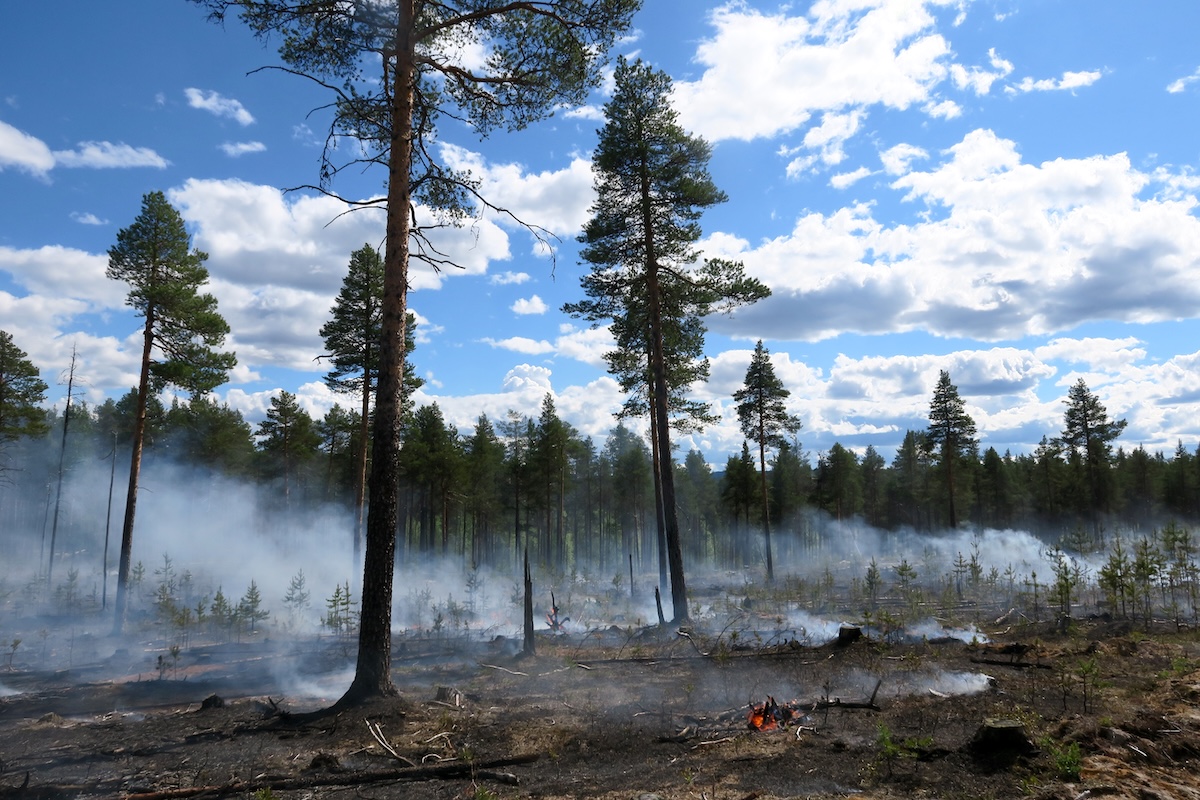
In June we had major boreal forest restoration under way in North boreal Sámi forest of Alttokangas, where appr. one hectare of clear-cut areas was burned for revitalisation of a logged area. Peatland restoration proceeded in Koitajoki river catchment and plans for Arctic Circle peatland restoration were made, they will commence in July. Fisheries helped Onkamo lakes with the removal of bream, ide and other coarse fish.
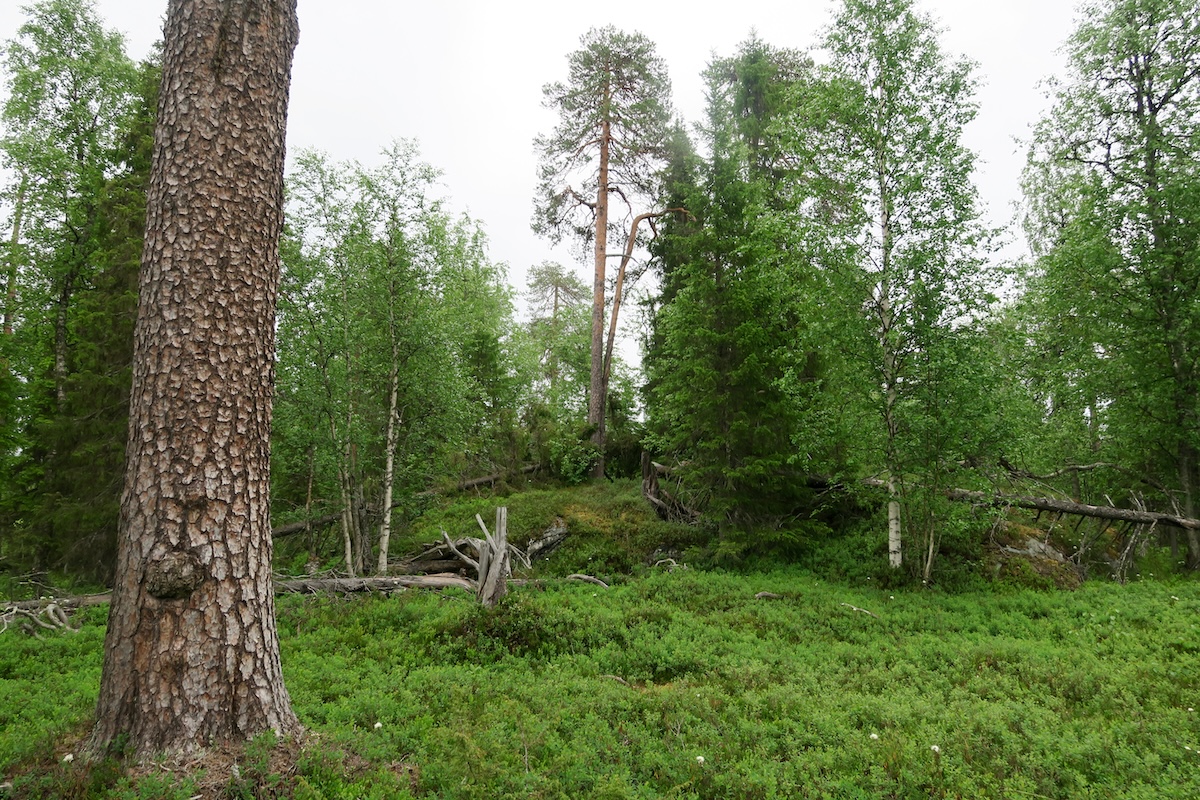
Alttokangas Sámi forest restoration burnsSeveral new sites, including boreal forests and large peatlands joined Snowchange in June. Out of these sites, now at 10,000 hectares, we have allocated Tongosoiva, a 100 hectare old growth forest to be the namesake site of one of our founders Eero Murtomäki, in Pelkosenniemi. This highlights the lifework he has done with nature and for nature. With these celebrations, we wish a great summer and see you in August!
Namesake site of Eero Murtomäki, in Pelkosenniemi, Arctic Circle.The Right to Self-Government and Child and Family Well-Being: A Case Comment on Cook et al. v. Canada
INDIGENOUS PEOPLES have long advocated for the right to
self-government related to their children and families. On May 11, 2026, the Misipawistik Cree Nation, Black River First Nation and Pimicikamak Cree Nation achieved a major success at the Manitoba Court of King’s Bench for the recognition and affirmation of this right.
In Cook et al v. Manitoba [Mispawistik], Chief Justice Joyal, for the Court, granted a declaration that the First Nations hold an Aboriginal right to
self-government in the area of child welfare and child and family services under s. 35 of the Constitution Act, 1982. The Chief Justice found that this includes First Nations’ right to raise their children in their culture and community, connected to their land and immersed in their languages and spiritual traditions.
The Chief Justice also granted a declaration that Canada and Manitoba’s funding, regulation, and provision of child and family services unjustifiably infringed upon the rights of First Nations in Manitoba. The Chief Justice accepted the “rich” record of evidence of their right to self-government over children and families from over seventeen witnesses, nine expert witnesses — including Dr. Leanne Betasamosake Simpson and Elder Florence Paynter — and a substantial number of reports of inquiry and government publications. All of that evidence tells a story of how Manitoba and Canada’s conduct resulted in the apprehension of children and their removal from their communities, land, spirituality, language, and culture.
All First Nations in Manitoba can rely on Misipawistik for their right to self-government. Chief Justice Joyal explicitly confirmed that “there is a right of all Manitoba First Nations to self-government in the area of CFS” (at para 699). Additionally, this class action was certified as “opt-in,” meaning that First Nations in Manitoba can opt in and be able to rely on the Court’s declarations related to Manitoba and Canada’s infringement of that right. Based on a notice plan filed with the Court, the Assembly of Manitoba Chiefs will provide information to First Nations in Manitoba.
In this case commentary, I explore the significance of the Misipawistik case for Indigenous peoples’ exercise of their inherent right to self-government over Indigenous children and families. Although this case is directly relevant to First Nations in Manitoba, Indigenous peoples in other provinces, the territories, and Nunavut may find parts of the Chief Justice’s reasons to be helpful.
The Significance of the Misipawistik CaseMisipawistik confirms what First Nations in Manitoba have always known: they have an inherent right to self-government over their children and families, which was never surrendered by treaty or extinguished. Misipawistik is significant because, for the first time in Manitoba, the Court has recognized aspects of this right under s. 35 of the Constitution Act, 1982.
In the last twenty years, Indigenous peoples have brought actions to hold Canada and the provinces to account for the harms caused to individuals and communities. The Indian residential schools litigation and class action, and the Indian Residential Schools Settlement Agreement, demonstrated that Canada could be sued for its conduct. The First Nations Child and Family Caring Society complaint at the Human Rights Tribunal proved that Canada’s underfunding of First Nations child and family services was discriminatory. And in the Moushoom and Trout class actions, the plaintiffs sued Canada for underfunding the Child and Family Services Program and its narrow interpretation of Jordan’s Principle.
Misipawistik relates to another aspect of all this litigation. Those cases focused on historical and ongoing harms caused to individuals by the government’s policies and actions. In Misipawistik, the First Nations asked the Court to declare that those policies and actions also infringed upon their right to self-government under s. 35 of the Constitution Act, 1982.
Misipawistik confirms that First Nations in Manitoba have a right to self-government over child and family services or child welfare. It also confirms that Canada and the Province’s funding, regulation, and provision of child and family services is an unjustifiable infringement of that right.Now, Canada and Manitoba (all the provinces, really) should have the direction they need to ensure that their involvement in Indigenous child and family services is not discriminatory or negligent, and that it does not infringe Indigenous peoples’ rights to self-government under the Constitution. Canada and Manitoba have started to take steps in the right direction by recognizing this right through legislation. Now, they have to live up to their commitments.
First Nations in Manitoba have a Right to Self-Government over Child Welfare and Child and Family ServicesIn Misipawistik, Canada argued that the First Nations needed to satisfy the test for proof of Aboriginal rights in Van der Peet. The Chief Justice rejected Canada’s arguments and modified the test based on changes to the law since it was first developed in 1996. Rather than strictly apply the Van der Peet test, the Chief Justice applied a modified version used by the Quebec Court of Appeal in its Reference regarding an Act Respecting First Nations, Métis and Inuit Children, Youth and Families. The modified test asks “whether the claimed right to self-government in a particular area goes to the cultural security and continuity — the cultural survival — of the Indigenous peoples claiming the right” (at para 677 in Misipawistik).
Under the ordinary Van der Peet test, Indigenous peoples must prove a practice, custom, or tradition was integral to their distinctive culture before contact (for First Nations and Inuit) or before effective governmental control (for Métis). As the Chief Justice himself noted, the Van der Peet test is “ill-fitting” for
self-government rights because it relies on “outdated ideas about how cultures work,” focuses on “discrete, particularized” practices such as hunting, fishing, and trapping, and freezes rights in the past (para. 657, 679). The Court found that “it would be […] inefficient and inconsistent with the goal of reconciliation underlying s. 35 of the Constitution Act, 1982” to require the First Nations to prove their rights under a strict application of the Van der Peet test (para. 682).
The Chief Justice reasoned that it was necessary to depart from a strict application of the Van der Peet test because of the evolution of the jurisprudence and legislation related to the right to self-government (paras. 654-685). First, he noted that the Court in Van der Peet and Delgamuukw had always recognized that the Van der Peet test might require adaptation and modification as new rights were claimed (para. 470, 663-667). Second, over the past few decades, the case law has increasingly supported the possibility that s. 35 protects an Aboriginal right to self-government (paras 651, 668-674). Third, the United Nations Declaration on the Rights of Indigenous Peoples (UNDRIP) affirms rights to self-government related to children and families and informs the Court’s interpretation of Indigenous peoples’ constitutional rights (paras. 675-676 and 704). Fourth, Canada’s federal United Nations Declaration on the Rights of Indigenous Peoples Act implements UNDRIP as a source of interpretation of Canadian law (para 430 and 681). And finally, and significantly, Canada and Manitoba have both recognized the inherent right to self-government over children and families through legislation (para. 693).
There is a clear takeaway from Misipawistik: Indigenous peoples’ rights to self-government are vital to the cultural security and continuity, or cultural survival, ofIndigenous peoples.
Many other areas of self-governance are also vital to cultural security and continuity. Misipawistik is a well-reasoned starting point for future claims related to self-government in Manitoba — and throughout Canada.
Canada and Manitoba’s Infringement on the Right toSelf-Government
Chief Justice Joyal found that Canada and Manitoba’s regulation, funding, and provision of Indigenous child and family services unjustifiably infringed the First Nations’ rights from January 1, 1992, to the present (2026). In support of his finding, he accepted Dr. Simpson’s evidence on the impact of child apprehensions on the community, and on a child’s connection to land, culture, language and spirituality. The Chief Justice quoted Dr. Simpson at length (at para. 720):
When children are removed from their First Nations family, the community and nation has no mechanism to ensure their teachings and way of life is passed down to the next generation. They have no way of fulfilling their responsibilities to mino-bimaadiziwin and this has a negative impact on their own sense of belonging and their own identity since they are no longer a link in the chain, as expressed in the concept of nindaanikoobijiganag. Removing a child from their cultural land-based context is akin to cutting their umbilical cord and disconnecting them from their community, their knowledge systems, and the land from which all meaning flows. The survival of First Nations knowledge systems and languages is entirely dependent upon the next generation of First Nations people learning land-based practices from their Elders.
…
Land-based practices when a child or children are missing are therefore filled with grief and loss because there is nowhere else that this way of life and these practices can be learned. In many regions, land-based practices are threatened and endangered practices because of the impact of colonialism, the residential and day school era, and the child welfare system. Because First Nations knowledge systems are land-based, spiritual, oral, and generated through communal practice, they cannot be learned at a desk in school or by reading books. They can only be learned by engaging in land-based practices over the course of one’s lifetime. When children are removed from First Nations communities and families by Child and Family Services, they no longer have access to this knowledge, and it becomes impossible for them to uphold their responsibilities to their community.
In his reasons, the Chief Justice considered evidence on the cumulative effect of residential schools and federal and provincial policies on the harms caused to the First Nations’ right to self-government, and the right to raise their children on the land, in their languages, cultures, and spiritualities (at para. 838). This is important, because in other cases, such as the residential schools litigation, the Court often separates these harms into distinct events, which often makes it difficult to litigate and remedy them. A cumulative approach recognizes how all of these events are related.
Indigenous Governments May Need to Consider Claiming Remedies for “Reconciliatory Justice” for Breaches ofAboriginal Rights
Misipawistik provides some direction on what governments should not do, but it does not provide much clarity to what governments must do when they choose to be involved in regulating, funding, or providing Indigenous child and
family services.
As others have noted, funding is one of the main challenges related to the exercise of the right to self-government for child and family services. Shortly after Canada enacted An Act Respecting First Nations, Métis and Inuit Children, Youth and Families (2019), the Yellowhead Institute published its report on the Act. Professors Naiomi Metallic, Jeffery Hewitt, Hadley Friedland, Aimée Craft, and Sarah Morales identify five areas where the Act fell short. On funding, Canada received a failing grade. Almost seven years later, it is still unclear how funding and resources will be transferred to Indigenous governments who want to exercise their right to self-government in this area.
In Misipawistik, the Court was asked to determine whether Canada or Manitoba had breached any duties — in common law, equity, or under the Charter — that were owed to the First Nations. Since duties specify a standard of conduct, any decision on these duties would have clarified Canada or Manitoba’s obligations, including financial, to the First Nations involved.
Although the Chief Justice found that Canada and Manitoba had unjustifiably infringed upon the First Nations’ right to self-government over child and family services, he dismissed the First Nations’ claims that other duties had also been breached. Unlike s. 35, which acts as a negative limit on government, those other claims would have imposed a positive obligation or duty on the Crown. In turn, this would have impacted the Crown’s legislative and executive discretion and, perhaps most importantly, its budgetary choices. Because, like it or not, Indigenous governments need resources and funding to provide child and family services in the First Nation communities.
One way to read the decision is that the Court was concerned about its impact on government discretion. Suppose the government owed the First Nations a duty of care and the standard of that care meant providing services in the child’s home community. That would require the government to fund, in many cases, more extensive preventative services. Those “less expensive”— yet so-often used — short-term options, such as apprehending children and removing them from their community, would be off the table because they would fail to meet the standard of care.
So, how might Misipawistik be helpful to other First Nations? Consider that the Chief Justice accepted witness evidence and public reports about Canada and Manitoba’s funding, regulation, and provision of services. This evidence clearly demonstrates gaps, challenges, and proposed best practices. It could, therefore, offer some guidance to inform future frameworks for
moving forward.
Indigenous governments may also want to consider seeking remedies for “reconciliatory justice.” In Pekuakamiulnuatsh Takuhikan, the Supreme Court of Canada ordered compensation because the Honour of the Crown was breached. I previously wrote about this for the Yellowhead Institute:
When the Honour of the Crown is breached, compensation may be required to advance what the majority calls ‘reconciliatory justice.’ The majority explains that the purpose of the Honour of the Crown is to ‘facilitate the reconciliation of the Crown’s interests and those of Indigenous peoples, including by promoting negotiation and the just settlement of Indigenous claims.’ Where the Honour of the Crown is breached, compensation advances reconciliation by ‘repairing and maintaining the special relationship with the Indigenous peoples on whom European laws and customs were imposed.’
Although compensation is intended to remedy the harm caused to the First Nation, it may also be used by a First Nation to restore the community and prepare it for exercising the right to self-government. Compensation, however, is not a reliable source for sustaining Indigenous child and family services into the future.
What Comes Next?The Court’s decision was the first of two stages in this litigation. The first stage addresses the certification of the plaintiffs’ claims as a class action and presents a summary judgment on the sole certified claim under s. 35. Now, the parties can negotiate and attempt to settle or proceed to the second stage. The Court’s reasons are incredibly thorough, and so the parties have been given a lot of direction. If they can’t come to a settlement, the Court will be asked to determine compensation for collective harms. Canada and Manitoba may be able to raise defences to limit their liability at the second stage.
Canada and Manitoba will likely argue that the claim for compensation is statute-barred. This occurs when a statute of limitations restricts compensation based on the number of years between the claim being filed and when it was first known to the plaintiff. It’s unclear at this point whether Canada and Manitoba will be able to rely on statutory limitation periods to avoid paying compensation for their infringements. However, it might be argued that statutory limitation periods are unconstitutional and cannot be applied.
In addition, it is possible that compensation for “reconciliatory justice” is available. In Pekuakamiulnuatsh Takuhikan, a majority of the Supreme Court of Canada found that compensation could be appropriate for breaches of the Honour of the Crown. It would seem inconsistent with the principles of reconciliatory justice for compensation to be barred by legislation enacted by a province or Canada. That is an odd sort of justice and reconciliation, where the party that causes the harm can determine whether it is liable.
Overall, the Chief Justice’s reasons provide significant guidance and direction to the parties. At this point, the parties might discuss how Canada and Manitoba could support First Nations in Manitoba as they exercise their inherent right to self-government over Indigenous children and families. It is clear that whatever Canada and Manitoba do, they must ensure that the First Nations are supported in the right to raise their children on the land, in their own communities, and with their own culture, languages and spiritual traditions.
Citation:
Franks, Scott. “The Right to Self-Government and Child and Family Well-Being: A Case Comment on Cook et al. v. Canada,” Yellowhead Institute. June 30 2026. https://yellowheadinstitute.org/2026/case-comment-on-cook-et-al-v-canada-the-right-to-self-government-and-child-and-family-well-being
Artwork by Dakota Brant, May Their Journeys be Gentle
The post The Right to Self-Government and Child and Family Well-Being: A Case Comment on Cook et al. v. Canada appeared first on Yellowhead Institute.
“Alligator Alcatraz” officially closing
Florida officials announced the closure of “Alligator Alcatraz” on June 25, 2026.
The federal government, with the support of the State of Florida, constructed and operated Alligator Alcatraz in violation of the sovereign rights of the Miccosukee Tribe, who took the government to court for illegally constructing the center without their consultation or consent.
As Native peoples, we have a sacred obligation passed down from our ancestors to care for the land and everyone who depends on it. The construction of the detention center in Florida was on the ancestral lands of the Miccosukee Tribe. The buildings endangered delicate and protected ecosystems. Alligator Alcatraz put thousands of immigrants at risk. The reported filthy and unsafe conditions were a violation of the human rights of immigrants and their families.
The administration’s violent crackdown on migrant communities is an affront to all we stand for as Native peoples. We are opposed to any government operation that violates the human rights of our neighbors and all who reside on this land. As we saw in Minneapolis earlier this year, ICE operations operate with little to no oversight or safeguards, acting illegally in many cases. Multiple people, including babies, have died in, or as a result of, ICE custody. This must end.
The closure of Alligator Alcatraz is a victory for human rights and Tribal Sovereignty, but we want to see an end to all inhumane and unlawful detention of our neighbors who are simply trying to live, work, and raise their families.
This story was originally published in Native News Online.
The post “Alligator Alcatraz” officially closing appeared first on Native Organizers Alliance.
The Fine Print I:
Disclaimer: The views expressed on this site are not the official position of the IWW (or even the IWW’s EUC) unless otherwise indicated and do not necessarily represent the views of anyone but the author’s, nor should it be assumed that any of these authors automatically support the IWW or endorse any of its positions.
Further: the inclusion of a link on our site (other than the link to the main IWW site) does not imply endorsement by or an alliance with the IWW. These sites have been chosen by our members due to their perceived relevance to the IWW EUC and are included here for informational purposes only. If you have any suggestions or comments on any of the links included (or not included) above, please contact us.
The Fine Print II:
Fair Use Notice: The material on this site is provided for educational and informational purposes. It may contain copyrighted material the use of which has not always been specifically authorized by the copyright owner. It is being made available in an effort to advance the understanding of scientific, environmental, economic, social justice and human rights issues etc.
It is believed that this constitutes a 'fair use' of any such copyrighted material as provided for in section 107 of the US Copyright Law. In accordance with Title 17 U.S.C. Section 107, the material on this site is distributed without profit to those who have an interest in using the included information for research and educational purposes. If you wish to use copyrighted material from this site for purposes of your own that go beyond 'fair use', you must obtain permission from the copyright owner. The information on this site does not constitute legal or technical advice.
 This site is not the official webpage of the Industrial Workers of the World.