You are here
News Feeds
The Unfinished Story of Romania’s Annulled Election
Nearly two years after the Constitutional Court’s decision to annul Romania’s 2024 presidential election, there is no clear end in sight to one of the most divisive political sagas in the country’s recent history. With anti-establishment sentiment on the rise, evidence of Russian interference might not settle the matter and rebuild trust with citizens.
Since his election as president in Romania’s May 2025 re-run, Nicușor Dan has yet to fulfil a key campaign promise: releasing a detailed report explaining why the Constitutional Court cancelled the 2024 presidential race after far-right candidate Călin Georgescu won the first round with nearly 23 per cent of the vote.
The Court justified its unprecedented intervention on the basis of intelligence assessments alleging a coordinated foreign interference operation. According to those evaluations, the campaign involved illicit financing, online manipulation, and Russian-linked networks that artificially boosted Georgescu’s visibility on platforms such as TikTok.
Dan repeatedly promised greater transparency on the matter. He initially suggested the report wouldlikely be released by the end of January 2026. Officials within the presidential administration later shifted the expected release date to the end of April. However, no report was published. Then, the president said that it would come out later this year, without providing a clear timeline.
In the absence of the promised report, Dan has nevertheless made increasingly categorical public claims. He has stated that, “without a doubt”, Georgescu had benefited from “an infrastructure created by Russia”. Dan has also argued that Romania has been the target of Russian hybrid warfare for at least a decade, and suggested that around 90 per cent of the information gathered by state authorities could eventually be disclosed publicly.
Dan may be right. The interference may have been real, serious, and well-documented. Still, there remains a consequential question that no authority has publicly addressed: Was annulling the election a proportionate response? Did the alleged Russian campaign decisively distort the result, or did nearly a quarter of Romanian voters choose Georgescu for reasons of their own?
The legitimacy of the annulment ultimately depends not only on what happened, but on whether what happened justified one of the most extraordinary interventions possible in a democratic process. And even proving proportionality may not be enough in a country where trust in institutions has been eroding long before 2024, and where, for many, the verdict on that question has already been reached.
Uncharted territoryIn March 2025 and in the wake of Romania’s decision to annul the elections, the Venice Commission, the Council of Europe’s advisory body on constitutional matters, released a report examining when constitutional courts may invalidate elections. The Commission emphasised that annulment should be a measure of last resort, reserved for exceptional circumstances and supported by clear evidence. Under international democratic standards, the Commission stressed, results should only be annulled when irregularities can be shown to have directly affected the vote’s outcome.
That is a high bar, and the Commission noted it is especially difficult to meet when the alleged irregularities concern online campaigning rather than voting or ballot counting. It added that online political speech is generally protected by freedom of expression standards, making it “currently hard to see how the form and content of campaign messaging of candidates could amount to a violation of electoral law that may lead to the annulment of the elections”.
How feasible, then, is it to demonstrate that the irregularities in campaigning invoked by Romania’s Constitutional Court determined the voting results? Luciana Alexandra Ghica, a political science professor at the University of Bucharest, argues that the challenge is notable. Establishing such a causal link requires long-term technical data, sustained multidisciplinary cooperation, and, above all, political will.
“This might be the most difficult part,” she explained, adding that success depends on “the mechanisms needed to support such an effort.” In her assessment, Romania currently lacks much of that institutional capacity, with “too little coordination, too little recognition of experts, and too many appointments based on personal connections”.
What the evidence showsIn its decision to annul the election, Romania’s Constitutional Court concluded that the electoral process had been “compromised throughout its entire course” by irregularities that “distorted the free and fair nature of the vote,” linking it to a coordinated foreign interference operation. Yet the ruling did not explain why annulment was a proportionate response, nor did it attempt to demonstrate how the alleged irregularities concretely affected the outcome.
Subsequent investigations have strengthened the case that Romania was indeed targeted by a sophisticated influence campaign. In September 2025, the General Prosecutor’s office published a report that Dan presented to European leaders the following month. The report exposes a coordinated Russian-linked operation of considerable scale. It states that companies including AdNow, MGID, Geozo, and AdsKeeper built alarge online influence network using fake social media pages, AI-generated content, and native advertising, as well as cloned doppelgänger websites designed to mimic trusted news outlets and public institutions.
Neither the prosecutor’s report nor the Constitutional Court’s original ruling demonstrates how the interference altered voting patterns, or whether less intrusive measures could have been taken to address the situation.
More than 2,000 Facebook pages and coordinated Telegram, TikTok, YouTube, and clickbait ecosystems were allegedly activated to identify and grow receptive audiences by manipulating vulnerable individuals, spreading anti-government information, and eroding trust in institutions ahead of Romania’s 2024 elections.
Then, closer to polling day, the same pre-built ecosystem was reportedly “activated” or repurposed more explicitly for electoral influence, with content shifting toward coordinated messaging that supported Georgescu and amplified political disinformation during the campaign period.
These findings are substantial, but they do not resolve the question of proportionality. Neither the prosecutor’s report nor the Constitutional Court’s original ruling demonstrates how the interference altered voting patterns, whether Georgescu’s performance depended decisively on the operation, or whether less intrusive measures could have been taken to address the situation.
Lingering questionsTwo considerations make the proportionality case harder to establish. One is the question of why voters supported Georgescu in the first place. While official explanations for the annulment have focused on foreign interference, analysts argue domestic political and social grievances also played a significant role in boosting his appeal. “External interference overlapped with internal anxiety, with Russia’s hybrid campaign exploiting a level of weakness within our own democracy,” stressed Ioan Stanomir, a political science professor at the University of Bucharest.
A key component of this anxiety was socio-economic dislocation. According to Stefan Hofmann, the head of the Konrad-Adenauer-Stiftung (KAS) in Romania, large segments of the electorate felt “isolated and shut out from opportunity”, particularly amid widening inequality. Georgescu was able to harness those frustrations by offering voters something more visceral than policy: a sense of belonging, identity, and recognition. “A discourse like Georgescu’s addresses the disorientation and fear people felt,” Hofmann said.
The second consideration is that this pattern was not unique to Georgescu. Elena Lasconi, the runner-up of the first round of the 2024 election, also sat outside the mainstream political establishment and made the corruption and failures of the political class a key theme of her campaign.
That both frontrunners emerged as vehicles for anti-establishment sentiment points to a broader public dissatisfaction that predated the election and cannot easily be attributed to foreign influence alone. “When voters want to channel their frustration, to put it mildly, they turn to options outside the political mainstream,” Hofmann said.
The stronger the role played by genuine domestic grievances, the harder it becomes to demonstrate that foreign interference was a decisive causal factor in producing Georgescu’s success. Hofmann notes that Romanian authorities could have considered a more targeted measure, like disqualifying Georgescu, while allowing the second round to proceed. Such an approach would have addressed concerns surrounding him without invalidating the votes already cast by millions of Romanians.
Whether that or other alternatives would have been legally viable or politically preferable, remains open to debate.
The counter-narrativeIn the absence of a fully consolidated public justification, the annulment has not settled into a single authoritative interpretation. Instead, it has become a contested political reference point, increasingly shaped outside formal institutional channels. Many Romanians doubted from the outset that the circumstances justified the Constitutional Court’s decision. An IRES poll conducted shortly after the annulment found that 62 per cent of respondents considered it a bad one.
Public trust in institutions has continued to decline since then. An INSCOP poll comparing July 2025 with January 2026 showed trust in the presidency falling from nearly 35 per cent to around 28 per cent, while trust in Parliament dropped from 14.5 per cent to just under 12 per cent.
At the same time, support for far-right parties and figures has grown. A January 2026 CURS poll found Georgescu to be the most trusted political figure in the country with an approval rating of 36 per cent. Following him were George Simion – another far-right figure who lost to Nicușor Dan in 2025 – at 32 per cent, and Dan at 31 per cent. Meanwhile, an INSCOP survey on parliamentary voting intention placed the Alliance for the Union of Romanians (AUR) – the party founded and chaired by Simion – at around 38 per cent, significantly ahead of any competitor.
For AUR and Georgescu, the annulment has become a central mobilising narrative, framed as evidence of systemic illegitimacy: the 2024 election was “stolen”, Georgescu is the rightful president, and all Romanian elections are vulnerable to manipulation. In response to Dan’s report presented to European leaders, AUR published its own assessment, describing the annulment as a “state coup” carried out through “unconstitutional means”.
In AUR’s framing, Russia’s intervention in the election was used as the pretext to justify the coup. The report concludes that Romania is “not a democracy”, and that “the coup has exposed the general vulnerability of state institutions and of the oligarchic system governing the country”. In November 2025, when speaking about municipal elections in Bucharest, Georgescu argued that “all these elections are a farce”.
In 2026, he once again claimed that the annulment was an act of “desperation” because the Romanian people were about to “take back their country”. He added that the Constitutional Court’s decision was conducted with “external colleagues, namely the European Union,” thus inverting the foreign interference narrative to implicate Brussels rather than Moscow.
According to Ghica, the narratives being pushed by Georgescu and his allies are unlikely to fade quickly. Voters who feel they were deprived of a rightful president do not simply absorb that grievance and move on: they carry it forward. What makes this particularly hard to reverse, Ghica argues, is that the audiences most exposed to these narratives are also the least equipped to scrutinise them: people with “limited digital and functional literacy, heavily reliant on social media, and affected by considerable social and economic inequalities.”
Voters who feel they were deprived of a rightful president do not simply absorb that grievance and move on: they carry it forward.
Dan’s quicksandWhile the “stolen election” narrative has provided AUR and Georgescu with a powerful mobilising tool, it does not fully explain their sustained popularity. Anti-establishment sentiment has been further reinforced by a broader climate of political instability that Dan’s first year in office has done little to change.
Dan, a former mayor of Bucharest, came to office as an outsider candidate, promising reform and a break with established political practices. That positioning made him vulnerable to any perception of indecision or continuity with the system he had promised to change. His first year as president has supplied critics with considerable material.
The most significant test came in early May 2026, when a no-confidence motion brought down the government of prime minister Ilie Bolojan. The procedure was initiated by the Social Democrats and AUR over painful austerity measures and tax increases introduced to address Romania’s fiscal deficit, the largest in the EU at9.3 per cent of GDP in 2024 and 7.9 per cent in 2025.
For the Social Democrats, this was also a political escape from the costs of staying in power as unpopular fiscal measures hit their voters and patronage networks, while AUR used the moment to amplify its anti-austerity, anti-establishment message.
Dan declined to publicly back Bolojan, arguing that his role was that of a mediator. Critics, however, say Dan’s position implicitly validated the legitimacy of the Social Democrats’ move. They are also openly questioning whether the president’s passivity in this and other matters can bring stability, or whether it surrenders control over key political outcomes to other forces, such as the Social Democrats.
Amid heightened political turmoil, the no-confidence motion passed. Dan subsequently sought to reassure the public, insisting that Romania remained stable. But as weeks passed without the confirmation of a new government, his assurances rang increasingly hollow.
“President Dan is in a delicate situation,” stressed Professor Stanomir. “One year after his election, he is compelled to rebuild a parliamentary majority. Such a challenge is likely to affect the years of his mandate that lie ahead.”
The rule, not the exceptionRomania has not been the only target of Russian electoral interference in the EU. Ahead of Poland’s 2025 presidential election, minister of digital affairs Krzysztof Gawkowski publicly warned of an “unprecedented” Russian attempt to influence the vote via cyberattacks, sabotage, and disinformation. Yet the elections proceeded.
In Croatia’s 2025 presidential election, researchers found that Russian-linked bots and disinformation campaigns favoured the anti-NATO candidate, Zoran Milanović,
spreading pro-Kremlin narratives on social media platforms to sway public opinion.
The EU has begun responding. In December 2024, the Commission launched a formal investigation into TikTok under the Digital Services Act, following the release of Romanian intelligence reports suggesting the platform had been used to facilitate foreign interference.
In an email exchange, a Commission spokesperson confirmed to me that the proceedings remain ongoing. The outcome of this initiative could have lasting implications for the role of major tech platforms in electoral processes and, more broadly, for the influence of privately owned tech companies on democratic institutions. Nevertheless, the Commission has been careful to define the limits of its role. “The organisation and conduct of elections is a national competence,” the spokesperson said. “Elections have always been and will always remain in the hands of the citizens.”
That delineation matters. The EU can pressure platforms to “protect the integrity of elections through the Digital Services Act” and sanction individuals linked to disinformation campaigns. It can also support member states through bodies like the newly established European Centre for Democratic Resilience, which aims to help EU countries build their capacity to detect threats to democratic processes and strengthen resilience.
What the EU cannot do is answer the questions that Romania’s annulment continues to raise. Those questions remain Romania’s to resolve.
Can the loose ends be tied?This is why the long-promised presidential report matters. Its most important task is not simply to establish what happened, but to explain why the response that followed was necessary and why less intrusive alternatives would have been insufficient to protect the integrity of the democratic process.
But even a report that does so convincingly may not be enough to reverse the continued decline in trust in institutions or the rising support for anti-establishment forces in Romania.
A detailed account might settle some of the concrete disputes that have festered since the annulment, like Georgescu’s claim that he is the rightful president. Rebuilding trust, however, will require more than evidence alone. “To get back some level of trust, people’s feelings have to be acknowledged and understood,” KAS’ Hofmann said, both in relation to the 2024 election and the broader dissatisfaction that preceded it. Romania’s traditional parties, he suggests, need to confront their own record more openly, even when doing so means acknowledging uncomfortable truths.
Ghica sees the structural obstacles as even more daunting. Trust in democratic processes and electoral integrity could be re-established, she argues, only through sustained, coordinated effort. “Time is not on our side in this hybrid war. The levels of social polarisation, digital and functional illiteracy, as well as economic inequality, which generates frustration toward others and toward authorities, remain very high.”
Latin American Organizations Unite Against Gene Editing in Agriculture and Seed Control
These technologies represent a new offensive by corporations to commodify life, seize control of seeds, and disregard the rights of the peoples who have protected biodiversity for millennia.
The post Latin American Organizations Unite Against Gene Editing in Agriculture and Seed Control appeared first on La Via Campesina - EN.
Kitimat: A Cautionary Tale
Charting a path to protect human health during prolonged gas flaring in Kitimat
July 14, 2026 – In May, Douglas Channel Watch allies in Kitimat, British Columbia (BC) contacted ALERT. The community of 8,300 residents is a marine port at the head of the Douglas Channel, a principal fjord along the BC Coast, in the traditional and unceded territory of the Haisla Nation. Previously, I worked with First Nations and Canadian allies in a successful multi-year effort to block the proposed Enbridge Northern Gateway Pipeline project that ended in November 2016 when the Canadian Prime Minister cancelled the project.
Much has changed in ten years. Kitimat now faces another daunting situation – a looming liquified natural gas (“LNG”) boom in northwestern BC, as part of the federal government’s plan to export liquified natural gas from Albert’s oil and gas fields to China. Exhausted from the pipeline battle, there was little resistance to the next wave of development pressure – this time for an LNG facility in Kitimat. No messy mixture of tar sands oil, but a clean natural gas! What could possibly go wrong?
Construction started on the Shell-led LNG Canada facility in fall 2018. According to an investigative report by The Narwhal, LNG Canada first tested its system to burn off gas by firing up its flare in fall 2024. By December, officials knew something was wrong – the 90-meter, roaring flare was a clue that the facility’s equipment was malfunctioning. LNG Canada first reported non-compliance with government air waste dumping permits in May 2025, adding that it could take up to three years to fix the problem. Nonetheless, the first tanker-load of natural gas shipped out to China in June 2025, and cargo continues to be shipped to this day.
In fall 2025, Kitimat residents first voiced health concerns from the natural gas flaring, despite offers from LNG Canada to temporarily relocate and pay people not to make complaints or raise concerns about LNG Canada’s flaring to government regulators, the media, or the District of Kitimat. By the end of 2025, LNG Canada was the estimated highest source of LNG flaring emissions in the world, based on 2024 emissions.
Kitimat is now “a compromised airshed.” A Northern Health study found Kitimat has 74 percent higher rates of asthma and chronic obstructive pulmonary disease than the rest of the province. While the Rio Tinto (formerly Alcan) aluminum smelter, operational in Kitimat since 1954, is likely the source of these chronic health issues, the local nurse in Kitimat is concerned that the LNG flaring is exacerbating these illnesses – and he is among the health care providers and advocates calling for government regulation.
On July 7, at the Kitimat Airshed Group general meeting, Ott spoke about the need for symptom-based health assessment – something the U.S. National Response Team now recommends for oil-chemical workers, and science supports. Symptom-based surveys more accurately define the health risk and the health impacts that can occur from annual, persistent, low-level exposures to gas flaring emissions – even though exposures may be well below the mandated standards. Generally, symptom-based health monitoring gives a more accurate estimate of health risk than numeric-based standards when complex mixtures of chemicals in various phases (gas, aerosol, particulate) are involved and interacting with other chemicals in the atmosphere such as occurs during LNG flaring.
The extended Q&A session revealed a path forward from ALERT’s perspective. Kitimat residents could:
- Petition the Kitimat town council with new information on the health risk of persistent, annual, low-level exposures from LNG emissions and ask the council to reverse its vote and support the call for a cumulative health impact assessment;
- Petition federal regulators for stationary air monitors in Kitimat and downwind communities to augment the sparse RAM (“remote area monitoring”) data, collected by one vehicle; and
- Work independently with the University of Texas TILT Research Team to conduct a pilot health study in their community and others in the Kitimat airshed.
Meanwhile, Canada’s first major LNG facility may soon be joined by others. Construction has already started on the Cedar LNG plant near LNG Canada in Douglas Channel. It is Canada’s (and the world’s) first Indigenous majority-owned LNG export facility. It promises to have “one of the cleanest environmental profiles in the world.”
What could possibly go wrong?
. . . . .
It bears mentioning that, over the last two decades, there have been other changes. Indigenous peoples have emerged as leaders in Canada’s renewable energy transition and are leading development in wind, solar, geothermal and utility-scale batteries. Even when faced with daunting situations, concerted efforts by people can lead to positive changes.
In solidarity,
Trump signs orders attacking Utah monuments based on false information
DENVER—President Donald Trump today signed proclamations attempting to shrink the boundaries of Grand Staircase-Escalante and Bears Ears national monuments, reducing the size of each by about 90 percent. Bears Ears National Monument will be reduced by over 1.2 million acres, and Grand Staircase-Escalante will be reduced by nearly 1.7 million acres.
During the signing, President Trump falsely stated that “You can’t go hunting, you can’t go fishing, you can’t do anything, you can virtually not even walk on it.” Deputy Interior Secretary Kate MacGregor followed up by saying, “That’s exactly right sir, so you are remedying that today.”
In fact, Bears Ears and Grand Staircase explicitly allow hunting, fishing, and outdoor recreation inside the monuments, something that the State of Utah’s own hunting regulations confirm.
MacGregor also misled the president and reporters when she claimed that the first monuments Teddy Roosevelt protected under the Antiquities Act were small in size. In fact, Teddy Roosevelt used the Antiquities Act to protect 800,000 acres of public land at the Grand Canyon. The Supreme Court later confirmed that such landscape-scale protections were proper under the Antiquities Act, and that large landscapes were considered “objects” under the Act.
The Center for Western Priorities released the following statement from Executive Director Aaron Weiss:
“We all know that President Trump has very little understanding of what he’s told to sign. But Kate MacGregor knows better. Giving the president documents to sign based on false information is unconscionable. If she’s going to take over running America’s public lands while Doug Burgum plays pool boy, the least she can do is be honest with the president and the American people.”
The proclamations also attempt to open the land originally inside the monuments for sale or lease to oil, gas, mining, and logging companies beginning in 60 days. Weiss added:
“Senator Mike Lee’s attempt to sell off America’s public lands failed last year. Now he’s a sore loser, trying again with language in the president’s proclamation that makes it clear America’s public lands are up for sale. The people of Utah and the entire country have spoken with one voice: These lands belong to all of us, not Mike Lee, President Trump, or the mining companies his kids are in business with.”
The Bears Ears proclamation also attempts to disband the Bears Ears Commission, a body that was created at the request of the five Tribal nations that advocated for the designation of the national monument. The new proclamation would create a new “advisory committee” that drastically dilutes Tribal input.
Public opinion: When the first Trump administration asked the public in 2017, it received 2.8 million comments, 98 percent of them in support of keeping national monuments in place. A 2024 poll conducted on behalf of the Grand Canyon Trust found 71 percent of Utah voters support keeping Bears Ears as a national monument and 74 percent support keeping Grand Staircase-Escalante, including majorities of Republicans. Three-quarters of Utah voters support presidents’ authority to protect public lands as national monuments. Across the West, Colorado College’s 2025 Conservation in the West poll found that 89 percent of Western voters, including 83 percent of Republicans, believe national monument designations made over the past decade should be kept in place.
The post Trump signs orders attacking Utah monuments based on false information appeared first on Center for Western Priorities.
Perfect recipe for food insecurity
by Neil Greet, first published at The Canberra Times
The cost of living is at the centre of Australians’ concern and a major political battleground, but one of the biggest inflation threats is flying under the radar: a food-cost crisis brewing at the intersection of two current global events.
The first is the war on Iran that has cut global fertiliser supply by a third and doubled prices in some cases, the consequence being less planting of grain staples this year, and lower yields over the next year. Australia’s wheat harvest in 2025-26 is expected to be down by a quarter. Across Asia, it will also affect rice and other crop yields.
The second is that 2026 may be the hottest year in the modern record, and 2027 even hotter, as a result of a record-breaking “super” El Niño driving up temperatures, on top of a world that has already heated by 1.5°C due to the burning of oil, coal and gas.
This will result in a hotter, drier 2026-27 summer in Australia and enhanced fire and drought risks, with the likelihood of lethal heat, record-breaking heatwaves, severe bushfires and adverse impacts on food production. In much of Asia, the El Niño will also produce hotter, drier conditions, unlivable heat and potentially weaker or delayed monsoons.
The deadly combination of a strong El Niño and the fertilizer crisis will have a significant impact on food production, and lead to shortages, higher prices, panic buying and perhaps social unrest and conflict in some parts of the world. We have seen this before: the main trigger of the Arab Spring was simultaneous wheat harvest failures in major producing countries, which led to a tripling of wheat prices and widespread rioting.
Four crops – wheat, rice, maize and soybeans – provide more than 60% of the world’s calorie intake. Wheat and maize are highly dependent on nitrogen fertiliser for protein content and yield; and high-yield rice is also significantly nitrogen fertiliser dependent. The threat to food security from the war on Iran is significant and ongoing, and so are extreme heatwaves which can severely affect yields.
The global interconnection of food systems and markets means that no country is insulated from the consequences. Climate change can be abrupt, and so can the consequences. But the Australian Government is one of many that appears not to routinely consider extreme climate scenarios in their security plans, instead assuming that climate risks will gradually evolve over the long term.
This is a dangerous mistake that would leave Australia poorly prepared. The double-whammy of fertiliser shortages and extreme heat could produce unexpected events in neighbouring countries with whom Australia has security arrangements, and Australia will not be immune. Defence and emergency services may be spread too thin over multiple competing response demands.
There is an urgent need to enhance the capacity of neighbours to withstand climate-changed-driven food shocks. Australia’s system for assessing and preparing for such climate risk is inadequate, and now is the time to establish an Abrupt Climate Change Early Warning System and fund and integrate climate research in Australia in a manner that will deliver a sound platform for realistic risk assessment and government planning and policy-making.
Domestically, climate disasters have had a dramatic impact on insurance premiums and availability. Premiums in disaster-prone regions have increased by up to 400%, posing a systemic financial risk.
The Australian Prudential Regulation Authority warns that an estimated one in seven households are uninsured today, which may be one in four households by 2050, and that a growing home insurance protection gap can lead to greater uninsured financial losses for households and banks, which can in turn erode financial system resilience.
Three food crops — maize, rice and wheat — account for 42 per cent of calories that people eat around the world. Scientists warn that even under an optimistic, low-emissions climate scenario, those crops will experience dramatic increases in heat stress by 2050, with 27 per cent of maize, 36 per cent of wheat and 87 per cent of rice at risk.
Climate-driven food shocks, reduced yields and higher production costs will drive ongoing food-flation. Research from the European Central Bank published in 2024 found that rising temperatures and extreme weather events will push food prices and inflation higher over the next decade, and that in a worst-case scenario food inflation would be more than four per cent per year across large parts of the world.
UN climate chief Simon Stiell says that the climate crisis is a cost-of-living crisis because “climate disasters are driving up costs for households and businesses… worsening climate impacts will put inflation on steroids unless every country can take bolder climate action.”
How events will unfold over the next 6 to 12 months is uncertain, but it is prudent to look ahead and consider plausible scenarios. Are we prepared for this, and for the consequences for human security both at home and across the Indo-Pacific?
Neil Greet is a former Australia Defence Force Colonel.
Kaiser nurses protest CEO’s appearance at AHA Leadership Summit
Deal with county fattens Stony Creek Volunteer Rescue Squad’s bank account
Two weeks after eliminating the funding for the county’s fire chief and his deputy, Sussex County supervisors voted to give an annual payment of $422,250 to the volunteer rescue squad run by Board Chairman Steve White, according to a memorandum of understanding obtained by Checks & Balances Project (C&BP).
The $422,250 is more than twice the annual revenue for the Stony Creek Volunteer Rescue Squad (SCVRS) in the years leading up to 2019, which is the last year the squad filed its tax returns with the IRS.
SCVRS lost its federal nonprofit status in 2023, because it failed to file tax returns for three straight years. It regained its nonprofit status in January 2025, but there are no more recent publicly available tax returns after 2019.
The squad’s revenues also include donations, billings to Medicare and Medicaid and other payments from the county. The $422,250 in county funding far outstrips SCVRS revenues in previous years. Consider:
- In 2015, annual revenues were $154,771;
- in 2016, $78,426;
- in 2017, $124,837;
- in 2018, they were $186,911.
C&BP obtained the memorandum of understanding through a Freedom of Information Act request.
Too many questions
The funding for Fire Chief Nick Sheffield’s job was removed during a special retreat in September 2025 after he questioned SCVRS’ finances during supervisors’ meetings. Sheffield also said that SCVRS had not filed its tax returns.
Sheffield said, “There’s a net profit to that and nobody knows what the net profit is,” though it is unclear if Sheffield was referring to Stony Creek’s profits of those of other county rescue squads.
By voting for the MOU, it appears that White may have had a direct conflict of interest that could be illegal under state law (Va. Code § 2.2-3112).
Ray Locker is the executive director for Checks & Balances Project, an investigative watchdog blog holding government officials, lobbyists, and corporate management accountable to the public. Funding for C&BP is provided by Renew American Prosperity and individual donors.
You may also want to read:
Checks & Balances Project files FOIA request seeking Sussex County EMS records
Checks & Balances Project seeks Sussex County’s recusal policy
Checks & Balances Project seeks more tips from Sussex County residents
Share Post Share
The post Deal with county fattens Stony Creek Volunteer Rescue Squad’s bank account appeared first on Checks and Balances Project.
Trump plans secretive attack on Utah national monuments, underscoring unpopularity
DENVER—An attack on Bears Ears and Grand Staircase-Escalante national monuments is reportedly scheduled to happen today at 4:30 pm ET behind closed doors at the White House, according to sources cited in news stories out of Utah.
President Donald Trump’s public calendar lists the 4:30 pm Oval Office event only as “sign an executive order,” with no mention of Bears Ears, Grand Staircase-Escalante, or the roughly two million acres of protected public land on the chopping block. The signing is marked as closed to press, and the White House has no press briefings scheduled today.
The Center for Western Priorities released the following statement from Executive Director Aaron Weiss:
“Planning this attack behind closed doors and providing no notice to the press, the five Bears Ears Tribes, or the public shows the administration knows it’s on the wrong side of history.
“When Trump tried to shrink Bears Ears and Grand Staircase in 2017, he flew to Salt Lake City and announced it from the state capitol in front of Utah politicians. This time, the president wants as few cameras in the room as possible. The five Tribes of the Bears Ears Inter-Tribal Coalition and the American people will learn what happened to their land from a press release.”
Public opinion: When the first Trump administration asked the public in 2017, it received 2.8 million comments, 98 percent of them in support of keeping national monuments in place. A 2024 poll conducted on behalf of the Grand Canyon Trust found 71 percent of Utah voters support keeping Bears Ears as a national monument and 74 percent support keeping Grand Staircase-Escalante, including majorities of Republicans. Three-quarters of Utah voters support presidents’ authority to protect public lands as national monuments. Across the West, Colorado College’s 2025 Conservation in the West poll found that 89 percent of Western voters, including 83 percent of Republicans, believe national monument designations made over the past decade should be kept in place.
Background: President Bill Clinton designated Grand Staircase-Escalante National Monument in 1996, and President Barack Obama designated Bears Ears National Monument in 2016 at the request of five sovereign Tribal nations. In December 2017, President Trump cut Bears Ears from 1.35 million acres to roughly 228,000 acres and Grand Staircase-Escalante from 1.87 million acres to about 1 million acres, the largest rollback of public lands protections in American history. Lawsuits from Tribes, conservation groups, and businesses challenging those cuts were put on hold in early 2021 and remain pending in federal court in Washington, D.C. President Joe Biden restored both monuments in October 2021.
Learn more:
-
Trump Orders Largest National Monument Reduction In U.S. History (2017) — NPR
-
America to Trump and Zinke: Don’t touch national monuments – Westwise
-
In defense of Bears Ears National Monument – Westwise
-
STATEMENT on proposed Bears Ears National Monument management plan – Center for Western Priorities
-
Bears Ears Plan Makes History – Grand Canyon Trust
The post Trump plans secretive attack on Utah national monuments, underscoring unpopularity appeared first on Center for Western Priorities.
National Nurses United condemns ICE murder in Maine
Florida Judge’s Ruling on Trump’s Self-Dealing Lawsuit is Yet Another Reason Senate Should Reject Todd Blanche
Today, U.S. District Judge Kathleen Williams ruled that President Trump’s lawsuit asking for $10 billion from the IRS was manufactured to justify a “settlement” that included a nearly $1.8B slush fund to reward political allies.
Robert Weissman and Lisa Gilbert, co-presidents of Public Citizen, issued the following statement in response:
“Donald Trump had the brilliant idea of suing the government he runs and resolving the lawsuit with the creation of an illegal and unconstitutional nearly $1.8 billion slush fund, paid for at taxpayer expense and likely to be distributed to January 6 insurrectionists, among others, as well with as an immunity deal protecting Trump and his family from IRS investigation. Acting Attorney General Todd Blanche was a willing participant in this fraud on the court and the American people.
“Trump and the DOJ tried to remove the issue from the court in which Trump originally filed the sham lawsuit but now Judge Williams has had her word. In a devastating order, she finds that ‘This lawsuit was not brought to vindicate rights; it was brought to manipulate the judicial process to pursue benefits unavailable in litigation because the Parties were not adverse.” The abuse is so severe that she has ordered the bar to consider sanctions against Trump’s attorney; ordered that Trump and DOJ never again refer to their collusive deal as a ‘settlement;’ and authorized amicus filers in the case — including Public Citizen — to seek attorneys fees.
“Crucially, Judge Williams finds that the abuse is committed equally by Trump’s private lawyers and the Todd Blanche’s Department of Justice, with DOJ’s conduct ‘equally untenable.’ Blanche’s DOJ ‘disregarded DOJ policies, and accomplished objectives beyond those authorized, as well as those specifically prohibited, by law.’
“If the Senate needed an additional reason not to confirm Todd Blanche as attorney general, it just got it.”
State Attorneys General Sue to Stop Paramount Skydance's Corrupt Takeover of Warner Bros. Discovery
On Monday, 12 state attorneys general launched an antitrust suit to block the proposed $111 billion merger between Paramount Skydance and Warner Bros. Discovery. California Attorney General Rob Bonta led the multistate lawsuit, joined by the attorneys general of Arizona, Colorado, Connecticut, Massachusetts, Minnesota, Nevada, New Jersey, New Mexico, New York, Oregon and Washington.
“The unlawful merger of these two entertainment behemoths would lead to higher prices, lower quality, and less content for film and television, harming movie theaters, basic cable distributors, and ultimately, audiences on every sofa and movie theater seat in the U.S.,” Bonta said in a statement announcing the lawsuit.
The combination of these two massive entertainment and news companies would create a media colossus with CBS, CNN, HBO, Nickelodeon and the Warner Bros. and Paramount film studios — among other major media properties — all under one roof. The deal’s announcement in 2025 spurred widespread protests led by a coalition of First Amendment advocates, unions, consumer-rights groups, and Hollywood actors and directors.
Free Press and others opposing the mega-merger explain that the deal would give one company the power and incentives to raise prices, lay off thousands of workers and limit consumer options, while giving the Trump-aligned Ellison family the power to shape public discourse at the president’s direction in exchange for the administration’s regulatory approval. That’s why administration officials like Secretary of Defense Pete Hegseth have openly rooted for the Ellisons to obtain CNN, based on their documented promises to make “sweeping changes” to the network to please Trump.
State attorneys general can sue to block mergers that violate federal and state antitrust laws. In March, California and New York attorneys general led a multistate coalition in suing to block the merger of broadcasters Nexstar and Tegna. Typically, state attorneys general have coordinated such antitrust suits with their federal counterparts at the Justice Department, but the Trump DoJ has shirked its consumer-protection duties in mergers involving favored Trump allies. Free Press and allies delivered hundreds of thousands of petitions opposing the Paramount Skydance-Warner Bros. Discovery deal to Attorney General Bonta’s office in May, and hosted rallies against Paramount’s corruption in New York, Los Angeles and Washington, D.C.
Free Press Co-CEO Jessica J. González said:
“Today we thank these state attorneys general for listening to the hundreds of thousands of people who have taken action to oppose this mega-merger. This deal would result in higher prices and fewer choices for consumers. It would open the door to wholesale layoffs across the news and entertainment industry and lead to less competition and more propaganda in news coverage.
“President Trump and his cronies want to rush this anti-competitive deal through because David Ellison has demonstrated time and again that he will leverage his control of his media empire to silence Trump’s critics and amplify MAGA propaganda. That’s corruption, plain and simple. Any merger of this scale would diminish creativity and diversity in entertainment, weaken journalists’ ability to hold those in power accountable and further endanger our democracy. This is especially true when the Ellisons are in charge. To win approval for their takeover of CBS News, the Ellisons promised to gut hard-hitting reporting across the network — and have gleefully followed through. And they’ll do the same to undermine editorial independence at CNN if they gain control of the global news network.
“The states’ challenge means that this corrupt merger is far from a done deal. While the administration won’t take a stand against the president’s billionaire cronies, we can still stop the Ellisons’ power grab. While Paramount is flaunting its corruption and toasting Trump officials, we’re standing with the workers and artists at the heart of the news and entertainment industries — and with the American people, who deserve a diverse and independent media system that works on their behalf, and against the self-interest of greedy billionaires and unethical politicians.”
Declaración sobre Autonomía, Democracia Radical y autodeterminación
Declaration on Autonomy, Radical Democracy and Self Determination - [Original Endorsing Communities and Organizations (Those present in the South Africa gathering)]
San Francisco nurses, doctors to hold protest at UC regents meeting for patient safety
PEER Warns OMB Grant Proposal Would Institutionalize Corruption and Destroy American Science
Public Employees for Environmental Responsibility (PEER) today filed formal comments calling on the White House Office of Management and Budget (OMB) to withdraw its sweeping proposed overhaul of the federal grantmaking system, warning that the rule would institutionalize political cronyism across over a trillion in annual public funds, destroy the independence of American science, and threaten the constitutional separation of powers.
The OMB proposed rule would require all discretionary federal awards to “demonstrably advance the President’s policy priorities” and would essentially abandon merit-based federal grantmaking. Specifically, this rule would:
- Require senior political appointees to review most awards before they are issued and allow them to terminate multi-year existing grants at will.
- Explicitly forbid appointees from “deferring to peer reviewers or routinely ratifying their recommendations,” thus leading to funding decisions not based on scientific merit.
- Allow political appointees to bypass public notice requirements for funding opportunities under broad national security interest exemptions that are not defined in the rule.
“This is not a grant reform — it is a blueprint for a spoils system applied to federal science funding,” said Tim Whitehouse, executive director of PEER, noting that this proposed rule arrives at a time when independent oversight mechanisms designed to detect corruption and financial mismanagement have been systematically destroyed or weakened by this administration.
The administration is already targeting grants on important environmental and public health issues that conflict with its political narrative, such as climate science, vaccine safety, chemical safety, and emerging infectious diseases, while it is simultaneously working to steer federal money to political allies such as Elon Musk and family members of the president, according to PEER’s comments.
“Grant money has historically been distributed through programs authorized by Congress using statutory, regulatory, formula-based, or competitive criteria rather than direct tests of political loyalty,” added Whitehouse. “Placing all scientific research funding under the unreviewable discretion of political appointees is not an administrative reform, it is a recipe for corruption on a scale not seen even in this administration.”
###
Trump expected to shrink Bears Ears, Grand Staircase-Escalante national monuments
President Donald Trump is expected to sign an executive order this afternoon shrinking Bears Ears and Grand Staircase-Escalante national monuments in Utah. Sources told ABC4 the signing is planned for 4:30 p.m. Eastern in the Oval Office. A White House official called the reports “pure speculation” in statements to multiple outlets.
This would be the second time Trump has attempted to shrink the two monuments. In 2017, Trump reduced Bears Ears by 85 percent and Grand Staircase-Escalante by nearly half. President Biden restored both monuments in 2021, and lawsuits over Trump’s original cuts remain pending in federal court in Washington, D.C. The 10th Circuit Court of Appeals recently allowed a separate Utah lawsuit challenging Biden’s restoration to move forward.
Reducing or eliminating national monuments is a broadly unpopular idea across political parties. “The American people have made it clear over and over again that they want our national monuments protected, not sold out to drilling and mining companies. President Trump and Interior Secretary Doug Burgum would be wise to remember that,” said Center for Western Priorities Executive Director Aaron Weiss in a statement.
A 2024 poll conducted for the Grand Canyon Trust found 71 percent of Utah voters support keeping Bears Ears as a monument, and 74 percent support keeping Grand Staircase-Escalante. Colorado College’s 2026 Conservation in the West poll found 91 percent of Western voters, including 87 percent of Republicans, want existing national monument designations kept in place.
Trump administration finalizes rule weakening endangered species protectionsThe Interior Department and NOAA Fisheries finalized a rule Friday redefining “harm” under the Endangered Species Act to exclude habitat destruction, reversing a long-standing interpretation. Interior Secretary Doug Burgum said the change “restores common sense, respects private property, provides much-needed certainty for landowners and follows the statute Congress actually passed,” while critics say it clears the way for oil and gas drilling, mining, and logging on habitat that imperiled species depend on. “For more than four decades, the definition of ‘harm’ recognized a simple truth: if you destroy the places wildlife need to survive, you are putting species on a path to extinction,” said Ben Greuel, wildlife campaign manager at the Sierra Club.
Quick hits Trump expected to shrink Bears Ears, Grand Staircase-Escalante national monumentsFox13 | ABC4 | Deseret News | KSL | Backpacker | Heatmap | KMYU | Center for Western Priorities [press release]
Trump administration finalizes rule weakening endangered species protectionsWashington Post | Reuters | E&E News | Associated Press | Fox 13 | Los Angeles Times
Park ranger exposes impact of 2025 public lands layoffs Interior proposes to rewrite grazing rules on 155M acres of BLM land ‘L.A. at rush hour.’ ‘Disney World.’ American national parks feeling the strain this summer Amid blistering drought, feds tap New Mexico aquifers to build border wall without permits Trump administration clears path for controversial Mojave Desert water pipeline Opinion: Selling off your off-road trails was never about affordable housing. Mike Lee’s latest vote proves Quote of the dayThere’s no money for overtime in a lot of national parks, there’s less people to save people when they get in trouble in national parks. So, less people to come for search and rescues, less law enforcement rangers to respond, less normal rangers to clean bathrooms. It is causing rangers to also have to go outside of their job description, which again is not what we signed up for, but we are public service, and a lot of us will do it because it’s for the greater good of the public.”
—Anonymous park ranger, Denver7
Picture This@u.s.forestserviceGolden hour? Nah, this is legendary hour.
Coconino National Forest offers a field of sunshine with a side of dramatic skies.
Drop a pin, drop your jaw and hit the trail in your big backyard.
(Forest Service photo by Deborah Lee Soltesz.)
Featured photo: Indian Creek at Bears Ears National Monument, Utah. Bob Wick, BLM
The post Trump expected to shrink Bears Ears, Grand Staircase-Escalante national monuments appeared first on Center for Western Priorities.
Radical Democracy: recovering the roots of self-governance & autonomy
Op-Ed | How Soil Health Is Promoted Through Traditional Knowledge and Modern Science
Let’s be ecologically and historically honest with ourselves. It’s not a fertilizer crisis we’re facing. It’s a soil health trainwreck brought on by the agricultural inputs industry itself.
In the global debate around food security, climate change, and sustainable agriculture, soil is finally receiving the attention it deserves. For decades, mainstream agriculture and policies around agriculture treated soil as an inert medium, ignoring soil biodiversity, both above and below ground. Understanding of fertility has been exceptionally narrow, with recommendations limited to a small number of nutrients supplied by synthetic fertilizers.
But this model is now showing strain. Across continents, soil has become increasingly degraded by global supply chains that favor monocultures and chemical inputs, perverse public subsidies, and self-serving narratives and advertisements that claim that industrial agriculture feeds the world (even as it ruins our soil). According to the World Atlas of Desertification, 75 percent of the land globally is degraded, with UNESCO warning that 90 percent of the land surface will be degraded by 2050.
Over thousands of years, long before the advent of industrial agriculture, farmers have sought to improve soil to grow nutritious and abundant food. During two days in May 2026, collaborative initiatives from India, Brazil, and Kenya, supported by the Agroecology Fund, shared insights in a conversation circle on soil health management as a climate resilience and food security strategy.
From India, organizations described how farmers they worked with faced soils left sterile by years of heavy chemical input use. Brazil’s Cerrado region, a vast, biodiverse tropical savanna, has been degraded by deforestation and monocultures dependent on the extensive use of synthetic fertilizers and pesticides. In Kenya, organizations highlighted declining soil fertility and the loss of beneficial organisms caused by hazardous agrochemicals.
These initiatives shared techniques to detect and improve soil biodiversity, including by applying participatory methodologies that value local knowledge. From India to Kenya to Brazil, successful soil restoration is emerging from collaboration between farmers, indigenous practitioners, and researchers.
Steve Vanek, a researcher in soil science at Colorado State University, and partner of the Manor House Agricultural Centre in Kenya, said that when farmer groups discuss the difference between good and poor soils, they often identify characteristics that align closely with scientific indicators. Farmers mention soils that are “easy to plough,” not crusty, rich in earthworms, and darker in color—observations linked to aggregation and organic matter.
In 2022, the Agroecology Fund joined a donor field visit to a diversified coffee farm on the slopes of Mt. Kilimanjaro in Tanzania. A foundation’s technical staff inquired about the technologies the farmer applied to measure carbon sequestration. The farmer crouched, scraped soil together with his fingertips, balled it in his palm and said, “this is how we know.”
Scientific research becomes powerful when it helps explain and strengthen farmers’ observations. It becomes more inclusive and accessible when it doesn’t rely on simplistic or reductionist metrics that may be misleading or onerous for farmers to measure.
In Kerala’s Wayanad district, a climate-vulnerable hilly region in southern India, farmers had long grappled with soil erosion, acidity, declining productivity, and the overuse of chemical fertilizers.
In response to this, Thanal Trust, an NGO based in the region and part of the conversation circle, established a local soil testing laboratory, generating soil health cards for farmers, and combining findings with field-level training rooted in agroecological practice. Farmers learned about structure, texture, microbial life, mulching, trap crops, green manures, and intercropping. Thanal invested in the farmer-to-farmer approach, working with a group of farmers—men and women—who became soil management experts, testing and validating the practices, and disseminating them within their communities.
As farmers observed improvements in their soil, they also scaled up traditional engineering practices on their farms, like mud pot irrigation—a traditional practice where water drips through micro-pores of clay pots to maintain moisture exactly where it is needed. Similarly, the practice of husk burial, where coconut husks are buried in trenches, serves to retain moisture and also provide potassium.
Sreelekshmi KJ from Thanal said, “The results were visible not only in yields but also in the soil itself. Organisms such as earthworms reappeared, soil microbes returned, and biodiversity thrived. Fields once described as sterile, lifeless mediums became living laboratories.”
In Kenya, the Manor House Agriculture Centre (MHAC) developed accessible soil health tools that allow farmers to test infiltration, organic matter, and biological activity using low-cost materials.
Vanek, who is a researcher in soil science at Colorado State University, USA, said their work focuses on “the biological and physical aspects as well as some of the major chemical limitations” in smallholder systems while “building based on local knowledge.”
Instead of expensive labs disconnected from communities, MHAC came up with soil health assessment kits for smallholder farmers. These provide simplified methods to test soil health for smallholder farmers, research for development, and citizen science.
The laboratory uses 3D-printed troughs, or even simple sieves made from cardboard and old stockings. With these low-cost methods to measure particulate organic matter, farmers are quantifying the food available for the soil-food web.
These learnings are enhanced through a Farmer Research Network (FRN) supported by the McKnight Foundation, which brings farmers together to diagnose problems, test practices, compare results, and co-produce knowledge. Farmers rank their own soils, identify constraints, and learn simple methods to assess organic matter, infiltration, pH, and biodiversity.
The relationship between scientific research and farming communities is changing in both directions. Farmers are learning from researchers—just as researchers are also learning from farmers.
In Brazil, the Centro Ecologico described partnerships with academics from federal institutes to study soils biologically rather than only chemically.
Joaquim Martins, a family farmer, noted how their approach seeks to understand the vision and perspectives of farming families on soil health while helping strengthen their management practices.
“We conducted a series of interviews with farmers to analyze soils through the lens of their lived experiences, priorities, and local knowledge. The aim was to translate scientific data into the everyday realities of farmers’ lives. It also raises an important question: How can scientific research engage in meaningful dialogue with people’s knowledge systems, and how can we, as scientists, remain self-critical in that process?” he said.
The program has engaged 200 farming families on the northern coast of Rio Grande do Sul, Southern Brazil. It has also involved Indigenous communities, who bring their own traditions of soil care and green manure practices, as well as women farmers who are helping share and strengthen local knowledge across the region.
Researchers applied the BioAS method promoted by the public Brazilian Agricultural Research Corporation (EMBRAPA) to examine respiration, carbon dynamics, and enzyme activity to compare conventional and agroecological systems. But just as importantly, they conducted participatory interviews to understand how families themselves define soil health: porous soils, moisture, insects, worms, easier rooting, and fewer hard crusts.
In other words, scientific research is beginning to respond to farmers’ diverse questions. Some traditional practices long treated as informal are now gaining recognition for their rigor.
Alessandra Karla da Silva from CEDAC, in Brazil, described work on “green nitrogen” produced from Gliricidia sepium biomass, a tree legume capable of fixing atmospheric nitrogen and cycling nutrients through biomass. Researchers from EMBRAPA and farmers supported by CEDAC agroecological center, in a co-creation model, are exploring how it can reduce dependence on synthetic nitrogen fertilizers while maintaining productivity.
These approaches exemplify that the idea is no longer to choose between modern science and traditional wisdom, but rather how to combine them inclusively, intelligently, and effectively.
Simply put, the global soil crisis will not be solved by chemistry and simplistic metrics alone. It requires memory, biodiversity, experimentation, and a trusting collaboration with farmers who know their soils.
Articles like the one you just read are made possible through the generosity of Food Tank members. Can we please count on you to be part of our growing movement? Become a member today by clicking here.
Photo courtesy of Thanal Trust
The post Op-Ed | How Soil Health Is Promoted Through Traditional Knowledge and Modern Science appeared first on Food Tank.
Centring equity in the fight for socialism: A hard lesson from the Human Rights Commission
As recently as 2025, human rights advocate and President of Black Class Action Secretariat (BCAS) Nicholas Marcus Thompson (pictured above, centre) has been publicly discussing...
The post Centring equity in the fight for socialism: A hard lesson from the Human Rights Commission first appeared on Spring.
Two proposed projects could help Sussex pay bills, boost EMS
Sussex County supervisors said they cut the funding for the county’s fire chief and deputy fire chief because they lacked the money to pay for increased fire and emergency medical service in the rural county.
That, Supervisor Thomas Baicy told Checks & Balances Project (C&BP), included contracting with the Stony Creek Volunteer Rescue Squad (SCVRS) run by Sussex Board Chairman Steve White despite concerns raised by the lack of information about SCVRS’ finances.
But Sussex supervisors are currently reviewing proposals that could drastically increase their annual EMS revenues and pay for the services they lack like a professionalized EMS service, which could reduce response times, county records show.
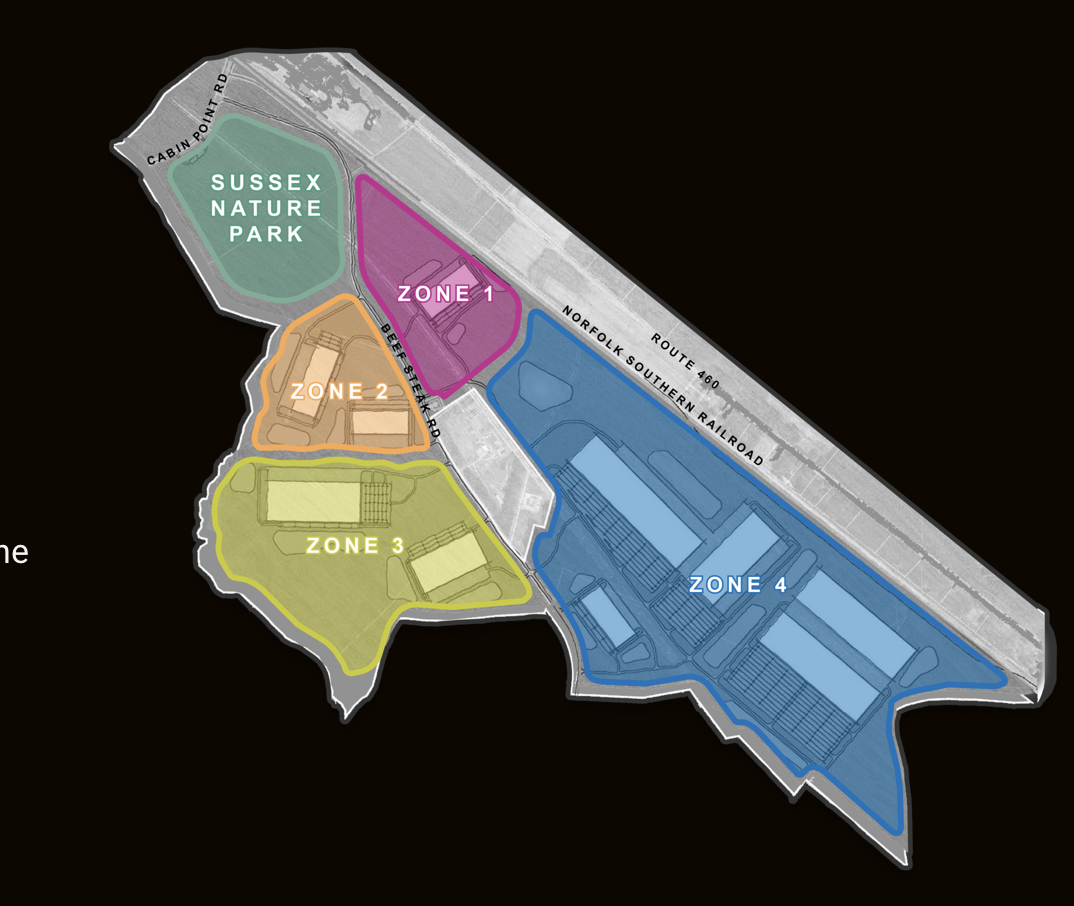
A proposed data center in Sussex County could be one of largest sources of local government revenue in the county’s history. According to an economic impact study prepared by Mangum Economics for the project:
The proposed data center would generate approximately $81.5 million annually in new Sussex County tax revenue once fully built in 2036, including $80.5 million in direct property taxes.
Total private investment is estimated at $17 billion ($5 billion in buildings and infrastructure plus about $12 billion in servers and other equipment installed by the eventual operator).
The proposed Blackwater solar project would contribute $170 million in local taxes over the 35-year life on the project, developers say. It would provide enough electricity to power 85,000 homes or the proposed data center.
Broken down annually, the solar project alone would contribute approximately $4.9 million to the county budget each year, which would be more than twice the annual amount Sussex County spends on emergency medical services, according to the county’s 2025-26 budget.
County supervisors will meet at 6 p.m., Thursday, July 16 to discuss economic development opportunities and other business.
Ray Locker is the executive director for Checks & Balances Project, an investigative watchdog blog holding government officials, lobbyists, and corporate management accountable to the public. Funding for C&BP is provided by Renew American Prosperity and individual donors.
You may also want to read:
Sussex supervisor says White drove surprise firing of county administrator
Sussex County Sheriff Ernest Giles Sr. refers C&BP complaint to local prosecutor and state police
Share Post ShareThe post Two proposed projects could help Sussex pay bills, boost EMS appeared first on Checks and Balances Project.
Pages
The Fine Print I:
Disclaimer: The views expressed on this site are not the official position of the IWW (or even the IWW’s EUC) unless otherwise indicated and do not necessarily represent the views of anyone but the author’s, nor should it be assumed that any of these authors automatically support the IWW or endorse any of its positions.
Further: the inclusion of a link on our site (other than the link to the main IWW site) does not imply endorsement by or an alliance with the IWW. These sites have been chosen by our members due to their perceived relevance to the IWW EUC and are included here for informational purposes only. If you have any suggestions or comments on any of the links included (or not included) above, please contact us.
The Fine Print II:
Fair Use Notice: The material on this site is provided for educational and informational purposes. It may contain copyrighted material the use of which has not always been specifically authorized by the copyright owner. It is being made available in an effort to advance the understanding of scientific, environmental, economic, social justice and human rights issues etc.
It is believed that this constitutes a 'fair use' of any such copyrighted material as provided for in section 107 of the US Copyright Law. In accordance with Title 17 U.S.C. Section 107, the material on this site is distributed without profit to those who have an interest in using the included information for research and educational purposes. If you wish to use copyrighted material from this site for purposes of your own that go beyond 'fair use', you must obtain permission from the copyright owner. The information on this site does not constitute legal or technical advice.
 This site is not the official webpage of the Industrial Workers of the World.